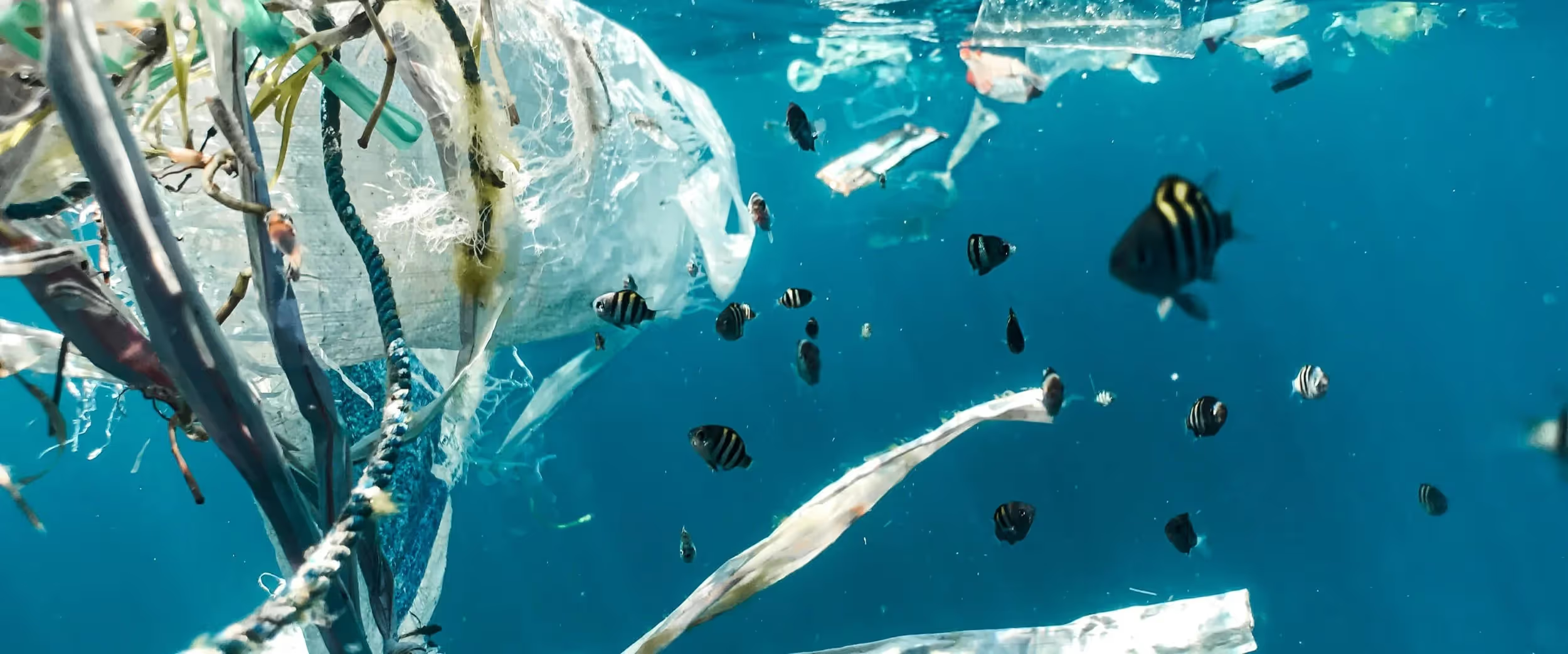

Net Positive Labs contributed circular economy expertise to a World Bank–commissioned consortium project examining how recycling systems in the Philippines can be strengthened and formalised.
The work analysed the structure of plastic recycling value chains and the livelihoods of workers operating within the country’s informal waste sector. Through literature review and field research, the project explored how recycling systems could evolve toward more integrated “closed-loop” models while improving safety, stability, and economic opportunities for workers involved in waste collection and processing.
The resulting research provides insights to support policymakers, development institutions, and industry actors in designing recycling systems that improve livelihoods while advancing circular economy objectives.
In many emerging economies, recycling systems depend heavily on informal networks of collectors, aggregators, and small-scale recyclers who recover valuable materials from municipal waste streams.
In the Philippines, thousands of workers — commonly referred to as waste pickers — collect and sort recyclable materials across urban and peri-urban areas. These activities play a critical role in national material recovery but often take place under challenging conditions, including unstable incomes, limited worker protections, and exposure to health risks.
At the same time, the country faces increasing pressure to improve waste management systems and address environmental challenges such as plastic pollution and landfill constraints.
Net Positive Labs contributed research examining how recycling value chains currently function and where targeted interventions could strengthen both environmental outcomes and worker livelihoods.
The work analysed material flows, roles within informal recycling networks, and opportunities to improve coordination between municipalities, recyclers, and informal workers. Based on this analysis, the project identified potential pathways for strengthening the sector, including improved worker protections, investment in recycling infrastructure, and greater integration of informal actors into formal waste management systems.
.svg)
