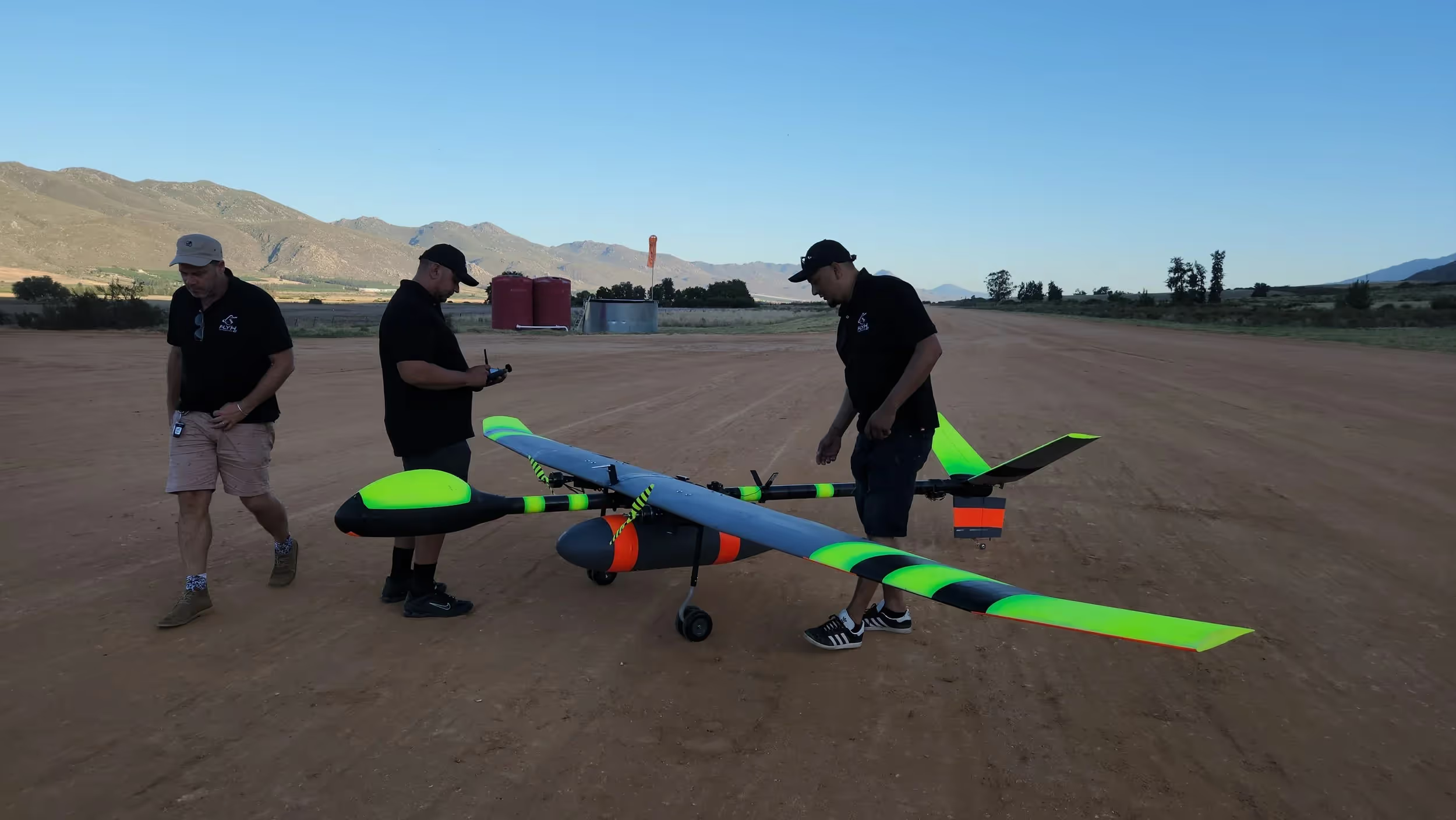

Net Positive Labs collaborated with FlyH2 Aerospace to explore practical applications for hydrogen-powered drone technology across renewable energy infrastructure, agriculture, and environmental management.
Working alongside the technology team, the initiative focused on identifying high-impact operational use cases for long-endurance aerial systems capable of covering large geographic areas with minimal emissions. The work also included connecting the company with prospective corporate users interested in large-scale monitoring and aerial deployment capabilities.
The exploration centred around FlyH2’s Dragonfly V platform, a hydrogen-electric fixed-wing drone designed for extended endurance and modular sensor payloads, enabling scalable aerial operations for infrastructure monitoring and environmental management.
Across sectors such as renewable energy, agriculture, and environmental management, organisations increasingly require monitoring and intervention capabilities that operate efficiently across large territories.
Traditional inspection methods often rely on manual fieldwork, ground-based equipment, or crewed aircraft operations that can be costly, carbon-intensive, and difficult to deploy frequently across remote environments.
Hydrogen-electric aerial systems offer a potential alternative. Compared with battery-powered drones, hydrogen-powered platforms can operate significantly longer, enabling large-area coverage within a single mission.
However, for emerging aerospace technologies, identifying viable early applications and engaging potential industry users is essential to move from prototype development to real-world deployment.
Net Positive Labs worked with FlyH2 to explore practical sector applications where long-endurance aerial systems could deliver operational value.
The collaboration focused on three primary domains:
Renewable Energy Infrastructure
Inspection and monitoring of solar parks, transmission corridors, and remote energy assets where large geographic coverage is required.
Agricultural Operations
Use of aerial systems for biological pest-control programmes, including Sterile Insect Technique (SIT) applications that reduce reliance on chemical pesticides.
Environmental Monitoring
Applications including wildlife observation, ecosystem monitoring, and invasive-species management across remote landscapes.
In parallel, Net Positive Labs supported FlyH2 in engaging potential corporate users interested in deploying long-endurance aerial monitoring systems.
The collaboration helped translate FlyH2’s hydrogen-powered drone platform into a set of clearly defined operational use cases across energy infrastructure, agriculture, and environmental management.
By identifying high-value applications and initiating discussions with prospective industry users, the work contributed to FlyH2’s early market development and helped position the Dragonfly V platform within sectors requiring large-scale monitoring and aerial operations.
As hydrogen-powered aerial systems move toward broader deployment, opportunities are emerging for collaboration across renewable energy operators, infrastructure managers, agricultural organisations, and environmental agencies.
Organisations interested in exploring pilot deployments, technology partnerships, or operational applications of long-endurance aerial systems are welcome to reach out to learn more about FlyH2’s Dragonfly V platform and potential collaboration opportunities.
→ Contact us to learn more and partner

.svg)
