

The global workforce is undergoing a fundamental shift as businesses, policymakers, and investors accelerate the transition toward a net-zero economy. The green transition—driven by climate policies, technological advancements, and shifting investor priorities—presents both significant economic opportunities and profound labor market disruptions.
According to the World Economic Forum’s Future of Jobs Report 2025, the green transition ranks as one of the most transformative forces shaping the global labor market, with 47% of employers expecting climate-change mitigation efforts to fundamentally reshape their industries by 2030.
However, while demand for green jobs is accelerating, the availability of workers with the necessary skills is lagging behind. The number of job postings requiring at least one green skill has increased by 22% in the last year, yet only 12% more workers acquired such skills in the same period. This mismatch raises critical questions:
This article explores these pressing questions, offering a data-backed analysis of green job trends, skilling challenges, and strategic responses that businesses and policymakers must consider to future-proof the workforce.
The Rise of Green Jobs: Key Trends and Projections
The green economy is no longer a niche sector—it is now a primary driver of employment and investment worldwide. According to the International Labour Organization (ILO), the green transition could create 100 million new jobs globally by 2030, but this growth is highly uneven across industries and regions.
Which Green Jobs Are Growing the Fastest?
The WEF report identifies the top job categories experiencing the highest demand growth due to sustainability efforts:
Projected Growth by 2030 - Amongst 15 fastest-growing jobs:
These roles are largely concentrated in renewable energy, electric mobility, and circular economy industries, where companies are racing to meet decarbonization targets. The EU Green Deal, U.S. Inflation Reduction Act, and China’s 14th Five-Year Plan have all reinforced the urgency of these skill sets.
However, beyond engineering and technical expertise, the green transition is also driving demand for skills in strategic management, policy, and supply chain innovation. Industries such as manufacturing, construction, and finance are also seeing a surge in demand for ESG analysts, carbon accounting specialists, and sustainable supply chain managers.
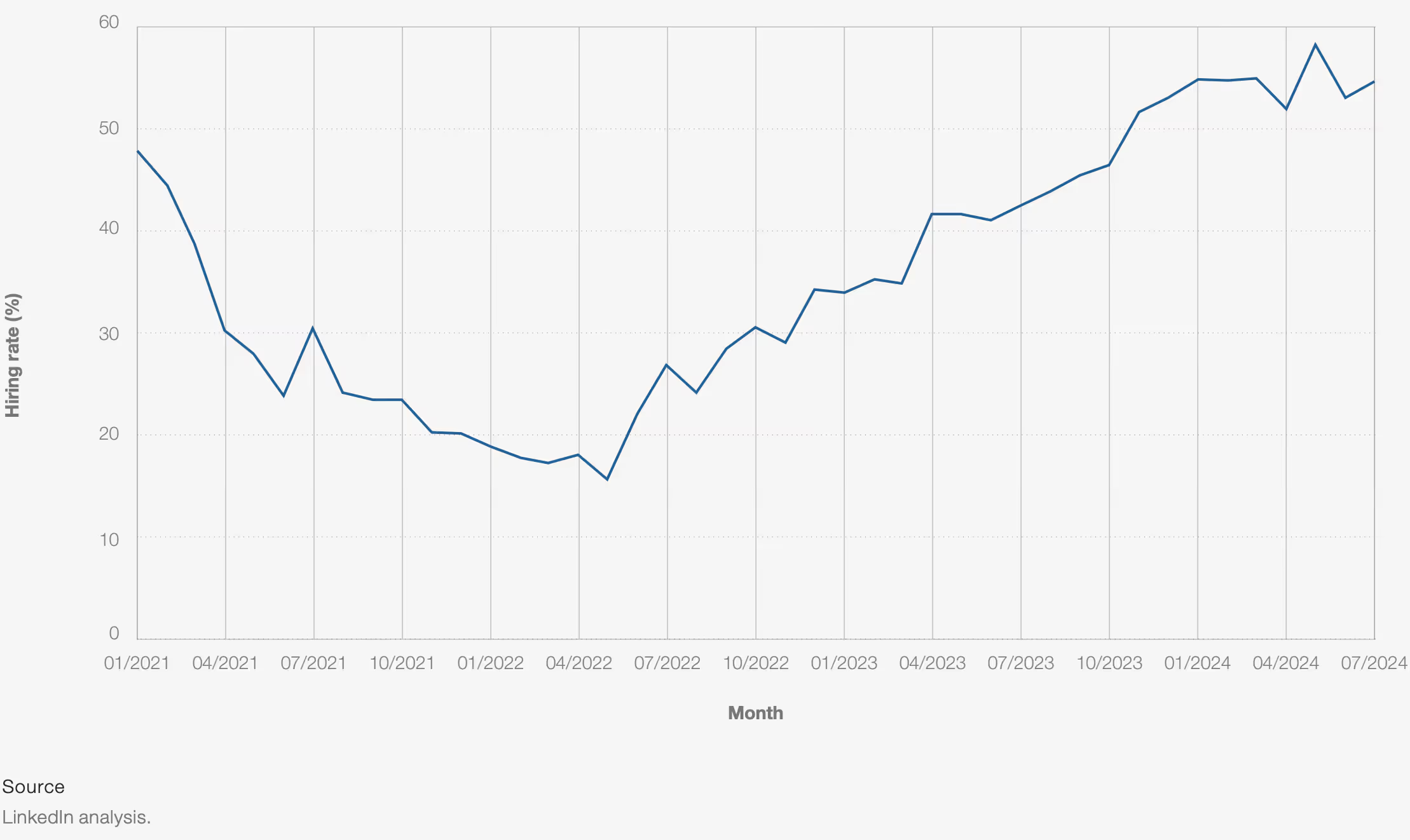
Green Hiring Rates
Where Will the Green Transition Create the Most Jobs?
Certain regions are expected to benefit more than others from the shift to sustainability-focused industries:
Europe: Leading the charge with policies like the Green Deal, expected to generate over 2.5 million net new green jobs by 2030.
United States: Driven by clean energy investments, the U.S. anticipates 9 million new green jobs by 2032, with significant opportunities in solar, wind, and EV industries.
China: Dominating the renewables sector, China accounts for 42% of global clean energy employment and will continue to expand green job creation.
Emerging Markets: Countries in Southeast Asia, Latin America, and Africa could see job booms in climate adaptation industries, but lack of workforce training infrastructure remains a bottleneck.
While job creation numbers are promising, a significant risk looms: the green skills gap.
The Green Skills Gap: A Critical Bottleneck
Despite the optimistic job projections, employers are struggling to find workers with the necessary green skills. The WEF report highlights that 63% of businesses cite skills shortages as their primary barrier to transformation, surpassing concerns about capital investment or regulatory complexity.
Key Challenges Driving the Green Skilling Deficit:
The question now is: how can businesses and policymakers close the green skills gap before it derails the transition to a net-zero economy?
Strategic Solutions: How to Build a Green-Skilled Workforce
1. Corporate Investments in Green Upskilling & Reskilling
2. Expansion of Government & Public-Private Training Initiatives
3. Adopting a Skills-Based Hiring Model
4. Investing in Emerging Markets’ Green Talent
Building the Workforce for a Net-Zero Economy
The green transition is not just about decarbonizing industries—it’s about fundamentally reshaping the workforce. While demand for green jobs is rising, a persistent skills gap threatens to stall progress.
Addressing this challenge requires urgent action from businesses, governments, and educators to prioritize green skilling at scale. The time to invest in a green-ready workforce is now, and companies that fail to act risk being left behind in the rapidly evolving landscape of sustainable business.
The question is no longer whether the green transition will happen, but whether if we will have the skilled workforce needed to deliver it.
For further reading;
Get your company started, or start for yourself with one of these free courses:
.svg)
